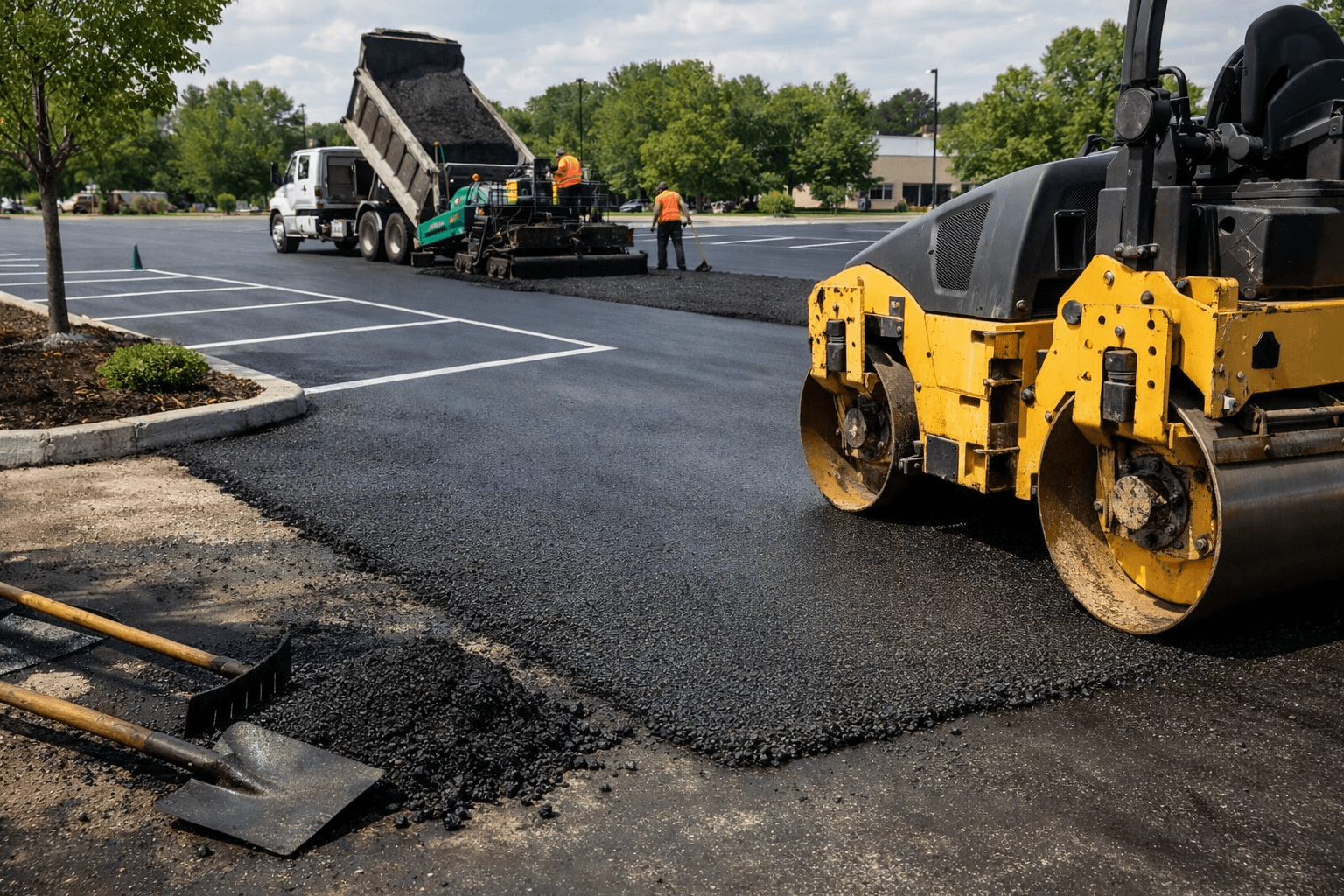
How much does it cost to build a parking lot in Akron, OH?
Parking lot construction in Akron typically runs from a few dollars per square foot for basic asphalt to significantly more when drainage, grading, or full base rebuilds are involved. Every site is different — soil conditions, slope, utility conflicts, and intended traffic loads all move the number. The only honest answer comes after a contractor walks the site and delivers a written, itemized estimate. We don't quote off a phone call.
How long does parking lot paving take from start to finish?
A mid-size commercial parking lot in Akron can typically be paved in two to five days once prep work is complete — but the full timeline from planning to open asphalt is usually four to eight weeks. That window covers design, grading, base compaction, paving, curing, and striping. Work can often be phased around an operating business so your tenants or customers aren't locked out during construction.
What makes a parking lot last 20+ years in Ohio's climate?
The base is everything. Ohio's freeze-thaw cycles — Akron averages over 40 freeze-thaw events per year according to NOAA's Cleveland/Akron forecast office — push water into every crack and weak spot. A parking lot that lasts decades starts with proper subgrade preparation, adequate base depth, and an asphalt mix designed for Ohio conditions. Sealcoating and regular maintenance extend that life further.
Planning a new parking lot is more involved than most property owners expect. This guide walks through every major decision — site prep, drainage, base construction, paving, and long-term maintenance — so you know what you're buying and what questions to ask before any dirt moves.
Why Akron's Freeze-Thaw Cycle Changes Everything About Base Prep
Akron sits in northeast Ohio's snowbelt, where pavement takes a beating that southern Ohio contractors rarely have to plan for. Water that collects under a poorly built lot expands when it freezes, heaves the asphalt, and leaves you with cracks, potholes, and premature failure within a few seasons.
Proper base depth is non-negotiable in this climate. For most commercial applications, that means six to twelve inches of compacted aggregate base, depending on soil conditions and expected load. Light-duty passenger car lots and heavy truck lots are built differently, and that difference has to be specified before a single ton of material is ordered.
At Swartz Paving, we build base sections specifically for Ohio's conditions. It's something we've dialed in since 2012 working on commercial and industrial sites across the state — from Sandusky down to Columbus and across to Youngstown. The same base standards we use in Akron apply everywhere we work, because Ohio's freeze-thaw problem doesn't stop at county lines.
What's Actually Involved in Parking Lot Construction?
Here's what goes into a properly built commercial lot, in order:
- Site survey and grading plan: Slope matters more than most people realize. A 1–2% slope moves water off the surface. Less than that, and you get pooling. More than that on long runs, and you get runoff problems at the lot edge or drainage inlet.
- Subgrade preparation: Soft or unstable soil gets stabilized or removed before base material goes down. Skipping this step is the fastest way to get a failing lot in three years instead of twenty.
- Aggregate base installation: Crushed limestone or gravel base is spread, graded, and compacted in lifts. Compaction density is verified — not assumed.
- Asphalt paving: Commercial lots typically use two lifts — a binder course and a surface course. The binder provides structural depth; the surface course provides the smooth, durable top layer.
- Drainage structures: Catch basins, curbing, and lot edges are set to direct water where it needs to go. Poor drainage is the number-one cause of premature lot failure.
- Striping and marking: ADA-compliant stalls, fire lanes, directional arrows, and loading zones get laid out and painted after the surface cures.
Our Parking Lot Construction service covers all of these phases with one consistent crew — the same people who walk the site with you run the equipment on paving day. No subcontractors. No handoffs.
New Lot vs. Resurfacing: Which Do You Actually Need?
| Factor | Full Construction (Right Call When) | Resurfacing Only (Risky When) |
|---|---|---|
| Base condition | Base is failed, soft, or missing | Applied over a compromised base |
| Drainage | Drainage is re-engineered properly | Old drainage problems resurface fast |
| Lot age | Lot is 20+ years old with structural cracks | Used to hide alligator cracking |
| Long-term value | 20–30 year lifespan with maintenance | Short-term fix on a failing surface |
- Base condition: Full construction when the base is gone — resurfacing over a failed base just delays the problem.
- Drainage: Full construction lets you fix drainage — resurfacing leaves bad drainage in place.
- Lot age: 20+ years with structural cracking usually means full reconstruction, not a patch.
- Long-term value: A properly built new lot lasts 20–30 years — resurfacing on a weak base rarely lasts five.
Not sure which you need? That's exactly what a site walk answers. We'll tell you honestly — if resurfacing is the right call, we'll say so. See our Commercial Paving services page for a full breakdown of what each scope involves.
Planning Around an Operating Business
One of the most common concerns we hear from Akron property managers is simple: "We can't shut the lot down." We hear it from retail centers, medical offices, industrial facilities, and apartment complexes alike.
Phased paving is a real solution, not a workaround. We can divide a lot into sections, pave one at a time, and keep the rest open to traffic. It takes coordination and a crew that knows how to manage a live site — which is exactly why using one hands-on team matters. A project manager who isn't on-site can't make real-time calls about traffic flow and safety.
According to the Federal Highway Administration's asphalt pavement resources, proper mix design and compaction are the two variables with the greatest impact on pavement service life. Both require consistent on-site oversight — not a subcontractor handed a spec sheet.
After the Lot Is Paved: Maintenance That Protects Your Investment
A new parking lot is a capital investment. The way you maintain it in years two through ten determines whether it lasts twenty years or ten. Sealcoating every three to five years keeps oxidation and water intrusion at bay. Crack filling — done early, before cracks widen — stops the freeze-thaw damage cycle before it reaches the base.
Our Commercial Parking Lot Maintenance Checklist walks through exactly what to inspect and when. If you're managing multiple properties across northeast Ohio, that checklist is worth bookmarking.
For property owners thinking through new driveways or access lanes alongside a parking project, the New Driveway Asphalt Paving Guide covers the same base-first principles in a residential and light commercial context.
Parking Lot Construction: Your Pre-Construction Checklist
- Get a site walk — never accept a quote based on square footage alone
- Ask about base depth and soil preparation, not just surface paving
- Confirm drainage plan before grading begins
- Request a written, itemized estimate — line by line
- Ask how the crew handles phasing if your lot stays open
- Understand ADA requirements for stall count and accessible routes
- Plan sealcoating into year two or three from the start
Frequently Asked Questions
How thick should a commercial parking lot be in Akron, OH?
For standard passenger vehicle parking lots, a common specification is three to four inches of asphalt over six to eight inches of compacted aggregate base. Lots that handle delivery trucks, dumpster service, or heavy equipment need more base depth — often eight to twelve inches — and a thicker asphalt section. Your contractor should spec the section based on a soil evaluation, not a flat standard.
Do I need a permit to build a parking lot in Akron?
Yes, in most cases. Commercial paving projects in Akron typically require a grading or site development permit through the City of Akron's Building Department, especially when drainage, curbing, or stormwater management is involved. ADA compliance for accessible stalls and routes is also required under federal law. Your contractor should be familiar with local requirements, though permitting responsibility ultimately falls to the property owner.
How many ADA parking spaces does my lot need?
The ADA Standards for Accessible Design require one accessible space for every 25 total spaces up to 100 spaces, with the ratio shifting as lot size increases. At least one in every six accessible spaces must be van-accessible with an eight-foot access aisle. Requirements are based on the total number of spaces in the lot, not individual parking sections. A site plan review can confirm exact counts before construction begins.
Can you pave a parking lot in winter in Ohio?
Asphalt paving requires ground and air temperatures above 50°F and a dry surface to achieve proper compaction and bonding. In Akron, the practical paving season runs roughly April through October, with some flexibility in mild shoulder-season weather. Planning a new lot or major resurfacing should start in late winter so permits, materials, and scheduling are in place when conditions allow work to begin.
How do I find a reliable parking lot contractor serving Akron?
Look for a contractor with documented commercial paving experience — not just residential driveways — who will walk your site before quoting, provide a written itemized estimate, and use their own crew rather than subcontractors. Experience in Ohio specifically matters because of the freeze-thaw climate demands on base construction. Swartz Paving has been doing commercial and industrial paving in Ohio since 2012 and serves the greater Akron area. Visit our Akron OH service area page for more detail.
Ready to get a real answer on your Akron parking lot project? Swartz Paving walks every site before we put a number on paper. Call us at (419) 528-9536 or request a free estimate online — tell us about your project and we'll follow up with next steps. We don't quote off a phone call, and we won't ask you to guess at square footage to get a number.
Ready to Talk Through Your Pavement Project?
Request a free estimate and we’ll follow up with next steps.