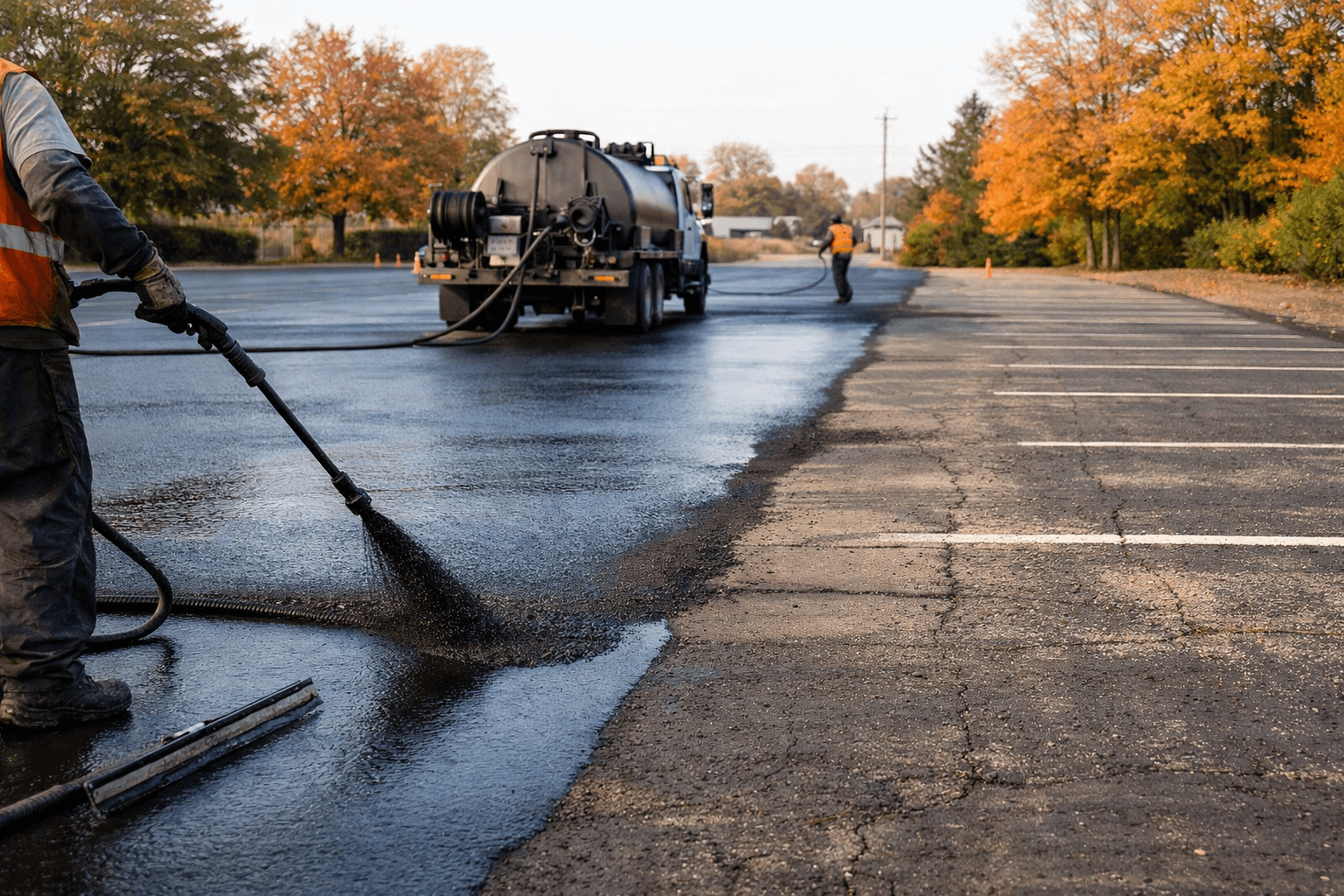
Is fall the right time to sealcoat a parking lot or driveway in Lorain, OH?
Yes — fall is the best window for sealcoating in Lorain, Ohio. Asphalt sealer needs surface temperatures between 50°F and 90°F to cure properly, and Lorain's September and October days hit that range consistently before winter cold shuts the season down. Waiting until spring means your pavement spends an entire Ohio winter unprotected against freeze-thaw damage.
How long does sealcoating last on Ohio asphalt?
A properly applied sealcoat typically lasts two to four years on commercial asphalt in Ohio's climate. The actual lifespan depends on traffic load, base condition, and how well the pavement was prepped before sealing. Sealcoating frequency in Ohio leans toward every two to three years for high-traffic lots and every three to four for lighter-use surfaces.
What happens if I skip sealcoating before winter in Lorain?
Unsealed asphalt absorbs water. In Lorain, that water freezes and expands inside the pavement, widening existing cracks and opening new ones — a process that repeats every freeze-thaw cycle from November through March. One unprotected winter can undo years of sound pavement and push a property from a sealcoat job into a resurfacing or full replacement conversation.
This article breaks down why the fall window matters specifically for Lorain, what the application process looks like, and what to ask any contractor before work begins. If you're trying to decide whether to schedule now or wait until spring, the answer is almost always: don't wait.
Why Lorain's Climate Makes Fall Sealcoating a Deadline, Not a Preference
Lorain sits right on Lake Erie. That lake-effect exposure means colder temperatures arrive earlier, moisture levels run higher, and freeze-thaw cycles are more frequent than in central Ohio. According to NOAA's Cleveland forecast office, the Lorain area averages its first freeze in mid-October, which gives most property owners a narrower application window than they realize.
Sealcoating is not a product you can apply and walk away from. The sealer needs time to cure fully before temperatures drop below 50°F. Most quality sealers need 24 to 48 hours of curing time with no rain and no overnight freezes. Push the job into late October and that window gets tight. Push it into November and you're gambling.
That's not a sales pitch — it's chemistry. Sealer applied over cold asphalt or cured in freezing temperatures doesn't bond correctly. It peels, chalks, and fails early, which means you paid for protection you didn't get.
What Does Sealcoating Actually Protect Against?
Sealcoating is a coal-tar or asphalt-emulsion coating applied over existing pavement. It creates a protective barrier that shields the asphalt binder underneath from the four main enemies of Ohio pavement:
- Water infiltration — prevents moisture from entering the asphalt matrix and reaching the base
- UV oxidation — slows the breakdown of the binder that holds aggregate together
- Fuel and oil spills — petroleum products soften asphalt; sealer creates a resistant surface layer
- Freeze-thaw cycles — a sealed surface sheds water instead of absorbing it, reducing frost heave damage
None of these apply only in winter. But in Lorain, the freeze-thaw threat is the most damaging and the most preventable. A sealed lot sheds water. An unsealed lot drinks it in — and you see the result come March when the pavement looks like a cracked riverbed.
Sealed vs. Unsealed Asphalt Through an Ohio Winter
| Factor | Sealed Pavement | Unsealed Pavement |
|---|---|---|
| Water absorption | Surface sheds water | Water penetrates the matrix |
| Freeze-thaw effect | Minimal cracking | Cracks widen each cycle |
| Spring condition | Surface intact, ready for traffic | New cracks, possible potholes |
| Next-step work needed | Routine maintenance | Crack filling, patching, possible resurfacing |
- Water absorption: sealed surface sheds water — vs. unsealed pavement that absorbs it
- Freeze-thaw effect: minimal cracking when sealed — vs. cracks that widen with every freeze cycle
- Spring condition: intact pavement ready for traffic — vs. new cracks and likely potholes
- Follow-up work: routine maintenance — vs. crack filling, patching, or resurfacing
The Fall Application Window in Lorain: What It Actually Looks Like
For most years in Lorain, the reliable sealcoating window runs from mid-August through mid-October. September is the sweet spot — daytime highs typically run 65–75°F, overnight lows stay above 50°F, and dry stretches are long enough to allow proper curing.
Here's what a professional application includes:
- Surface cleaning — debris, dirt, oil spots, and any vegetation removed from cracks
- Crack filling — open cracks addressed before sealer goes down (sealer does not bridge or repair cracks on its own)
- Edge detailing — hand-applied sealer along curbs, drainage structures, and building lines
- Squeegee or spray application — method depends on surface texture and size
- Cure time — minimum 24 hours before vehicle traffic, 48 hours preferred
At Swartz Paving, the crew that walks your property for the estimate is the same crew that shows up with the equipment. No subcontractors, no unfamiliar faces — just the same team that understood your layout from day one. That matters when you're working around an operating business and need to phase work without disrupting customers.
Ready to lock in your fall slot? Call (419) 528-9536 or request a free estimate online — we don't quote off a phone call, so we'll schedule a site walk first.
Should You Crack Fill Before Sealcoating?
Yes — every time. Sealcoating over open cracks traps moisture underneath the seal and accelerates damage from below. Proper prep means filling cracks first, letting filler cure, and then applying sealer over a stable surface. According to the Pavement Coatings Technology Council, surface prep accounts for the majority of sealcoat performance outcomes — the application itself is straightforward once the surface is ready.
If your lot has cracks wider than a quarter inch, those get hot-pour rubberized filler. Hairline cracks get sealed as part of the sealcoat process. Either way, skipping this step is how sealcoating fails early.
Commercial and Industrial Properties: Planning Around Your Business
If you manage a retail center, industrial facility, or office park in Lorain, OH, you don't have the luxury of shutting down a parking lot for two days. A good contractor accounts for that from the start.
Swartz Paving has worked commercial and industrial sites since 2012 — and phasing work around an operating business is standard practice, not a special request. We can seal half a lot while the other half stays open, sequence striping to minimize closed-stall time, and schedule early-morning starts to get cure time in before the afternoon rush.
Our commercial paving and industrial paving background means we also know what heavy truck traffic, equipment staging areas, and loading dock approaches do to pavement — and we'll flag any areas where sealcoating alone won't hold before we ever put a squeegee to the surface.
All of our work starts with a clear, itemized written estimate. You know what you're getting, what it costs, and what the timeline looks like before any commitment.
Frequently Asked Questions
Can sealcoating be applied in September or October in Lorain, OH?
Yes — September is ideal, and early October works when daytime temps stay above 60°F and overnight lows stay above 50°F. The key is confirmed cure time before the first hard freeze. In Lorain's climate, mid-October is typically the cutoff for reliable results. Scheduling in September gives you the most buffer and the best chance of a full 48-hour cure before any cold snap.
Does sealcoating fill cracks or just coat the surface?
Sealcoating coats the surface — it does not fill or structurally repair cracks. Cracks need to be cleaned and filled with hot-pour rubberized filler before sealer is applied. Applying sealer over open cracks traps moisture underneath and accelerates deterioration. Think of sealcoating as the protective finish coat, and crack filling as the required prep step that comes first.
How long do I need to keep traffic off a freshly sealed parking lot?
At minimum, 24 hours for foot traffic and light passenger vehicles. Forty-eight hours is better, especially in fall when overnight temperatures drop and slow curing. Heavy trucks and equipment should stay off for 72 hours when possible. Rushing traffic back onto fresh sealer causes tire marks, surface disturbance, and uneven wear that shows up within weeks.
How often does a commercial parking lot in Ohio need sealcoating?
Most commercial lots in Ohio benefit from sealcoating every two to three years. High-traffic surfaces — drive-throughs, delivery lanes, loading areas — may need attention closer to every two years. Lower-traffic lots can often go three to four years between applications. The actual interval depends on surface condition, traffic volume, and whether crack filling is kept current between sealcoating cycles.
Do you provide written estimates before sealcoating work begins?
Yes — always. Swartz Paving provides clear, itemized written estimates after a site walk. We do not quote off a phone call or a photo. Every estimate covers the scope of prep work, the application method, cure requirements, and any crack filling or patching needed before sealer goes down. There are no surprise line items once work begins. Call (419) 528-9536 to schedule your site walk.
Don't let another Ohio winter put your pavement at risk. Contact Swartz Paving, LLC to request your free fall sealcoating estimate — call (419) 528-9536 or visit our full list of services to learn more. We'll walk the property, assess what prep is needed, and give you a written estimate before any work begins. Spots fill up fast in September — tell us about your project and we'll follow up with next steps.
Ready to Talk Through Your Pavement Project?
Request a free estimate and we’ll follow up with next steps.